All Categories
Featured
7 Governance Trends Defining the Next Decade of Business
Table of Contents
- – Adapting Leadership Models for an Unpredictabl...
- – The Integration of Data and Human Intelligence
- – The Rise of the Fractional Executive
- – Global Growth and Sell a New Era
- – Managing Regulatory Divergence
- – Sustainability as a Monetary Crucial
- – The Impact of Expert System on Labor Force St...
- – Future Outlook for the Mid-Market Sector
Adapting Leadership Models for an Unpredictable 2026 Economy
Management teams within the UK mid-market are currently browsing a period of substantial structural modification. In 2026, the traditional top-down hierarchy has actually mostly fallen out of favour, replaced by more nimble, dispersed decision-making processes. This shift is not merely a pattern but a need driven by the speed of market fluctuations and the intricacy of global supply chains. Executives now focus on fast action times and the capability to pivot operations without the bureaucratic hold-ups that characterized earlier years.
The mid-market, specified by firms with turnovers varying from ₤ 10 million to ₤ 500 million, remains the engine of the British economy. The management requirements for these firms have altered. In 2026, a Chief Executive is expected to be as comfortable with algorithmic information as they are with standard balance sheets. The focus has actually moved far from long-term five-year plans, which often became obsolete before they were printed, towards rolling eighteen-month methods that are updated every quarter based on real-time efficiency signs.
Success in this environment depends upon how quickly a board can analyze external information. External pressures, consisting of shifting trade contracts and new carbon taxes, require a level of flexibility that was as soon as the reserve of small start-ups. Now, even developed mid-sized makers and service providers are embracing these approaches to remain competitive against worldwide rivals. Leaders who stop working to embrace this mentality frequently discover their companies struggling with stagnant growth or decreasing margins.
The Integration of Data and Human Intelligence
Information is the main currency for UK directors in 2026. The sheer volume of info available has actually produced a new challenge: distinguishing signal from noise. Effective leaders are those who develop groups capable of synthesising diverse information points into actionable intelligence. This has resulted in the rise of the data-literate C-suite, where every member, from marketing to finance, has a basic understanding of information science. Investment in Global Recruitment has actually become a standard line item for any firm major about maintaining its market share.
Rather of relying on gut instinct, 2026 executives use predictive modelling to anticipate shifts in consumer behaviour. For example, a mid-market merchant may utilize these designs to change stock levels weeks before a forecasted change in local demand happens. This proactive method minimizes waste and makes sure that capital is not bound in slow-moving stock. It is a scientific, efficient way of operating that leaves little space for the sentimental accessory to old line of product or tradition systems.
Despite the heavy reliance on innovation, the human component remains vital. In 2026, the role of a leader is to function as a filter, making sure that the company stays concentrated on its core objectives while the innovation manages the repetitive analysis. This balance avoids the company from becoming a cold, automated entity. High-performing leaders spend more time on internal culture and talent advancement than their predecessors did, recognising that a competent workforce is the only thing that can not be quickly reproduced by rivals.
The Rise of the Fractional Executive
A notable advancement in 2026 is the prevalent use of fractional leadership. Many mid-market firms no longer employ a full-time Chief Technology Officer or Chief Sustainability Officer. Rather, they employ extremely specialised specialists on a part-time or task basis. This enables business to access high-level competence without the expense of a full-time executive income and advantages package. It likewise brings fresh viewpoints into the boardroom, avoiding the groupthink that can occur when the same group stays together for too lots of years.
These fractional leaders often work across a number of non-competing companies, bringing a breadth of experience that an irreversible staff member might do not have. They are especially effective for specific tasks, such as managing a merger or supervising a substantial digital overhaul. This model fits the 2026 demand for agility, enabling companies to scale their management capability up or down as the market determines. For lots of, identifying Comprehensive Global Recruitment Solutions as a priority has actually led straight to this versatile staffing option.
Global Growth and Sell a New Era
British mid-market companies in 2026 are significantly looking beyond European borders for development. While trade with neighbouring countries remains essential, the focus has actually shifted towards high-growth markets in the Indo-Pacific and The United States And Canada. This change is supported by several trade agreements transferred the last few years, which have decreased tariffs and streamlined professional credentials. Leadership groups now include specialists in global trade law and cross-cultural settlement to handle these brand-new relationships.
Growth in 2026 is rarely about physical presence alone. Many UK firms are using digital-first entry techniques, testing markets with online services before committing to regional offices or making plants. This "lite" entry model decreases the financial risk of global growth. It permits a business to develop a brand name and understand regional subtleties before making a heavy capital investment. Leaders in 2026 are much more cautious about "flag-planting" and choose a phased approach that prioritises success over gross turnover.
Supply chain security is another major focus. The interruptions of previous years taught mid-market leaders that geographical diversification is necessary. In 2026, numerous companies have actually adopted a "China Plus One" or "Europe Plus One" strategy, ensuring they have secondary providers in various regions. This redundancy includes cost, but it provides a level of security that shareholders now require. Leaders who can demonstrate a durable supply chain are seen much more positively by investors and loan providers alike.
Managing Regulatory Divergence
Operating in multiple jurisdictions in 2026 ways handling a complicated web of various policies. The UK has taken its own regulative path in sectors like life sciences and financial technology, which provides opportunities however likewise creates friction for companies running globally. Leaders need to be adept at navigating these differences without letting the cost of compliance eat into their margins. This has led to a boom in regulative technology, which automates much of the tracking and reporting needed by different federal governments.
The ability to stay certified while remaining competitive is a trademark of the 2026 leader. It needs a deep understanding of both regional and global law. Mid-market companies often partner with specialized specialists to handle this, guaranteeing they do not fall nasty of new guidelines concerning information privacy or ecological standards. Those who manage this successfully discover that they can utilize their compliance record as a competitive benefit, winning agreements from bigger corporations that require strict adherence to international standards from their suppliers.
Sustainability as a Monetary Crucial
In 2026, sustainability is no longer a separate department or a marketing exercise. It is integrated into the core financial strategy of every successful mid-market firm. This change was driven by 2 elements: investor need and the rising expense of carbon. Banks and personal equity firms now look at a company's ecological footprint as an essential indicator of its long-term viability. A firm with a high carbon strength is viewed as a high-risk financial investment, resulting in greater loaning costs.
Management in 2026 involves finding ways to decouple growth from environmental effect. This often implies investing in new production processes or switching to renewable resource sources. These are not simply ethical choices but hard-nosed business decisions intended to protect the bottom line. Executives who can show a clear path to net-zero are seeing their business assessments increase, while those who drag are discovering it progressively tough to draw in capital or top-tier talent.
The 2026 workforce, particularly more youthful workers, anticipates the business they work for to have a clear sense of function. This has made recruitment a challenge for companies that can not show a dedication to social and environmental obligation. Leaders now invest a considerable quantity of their time communicating their worths to both internal and external stakeholders. This openness is essential for constructing rely on a period where business actions are under continuous examination from social media and activist investors.
The Impact of Expert System on Labor Force Structure

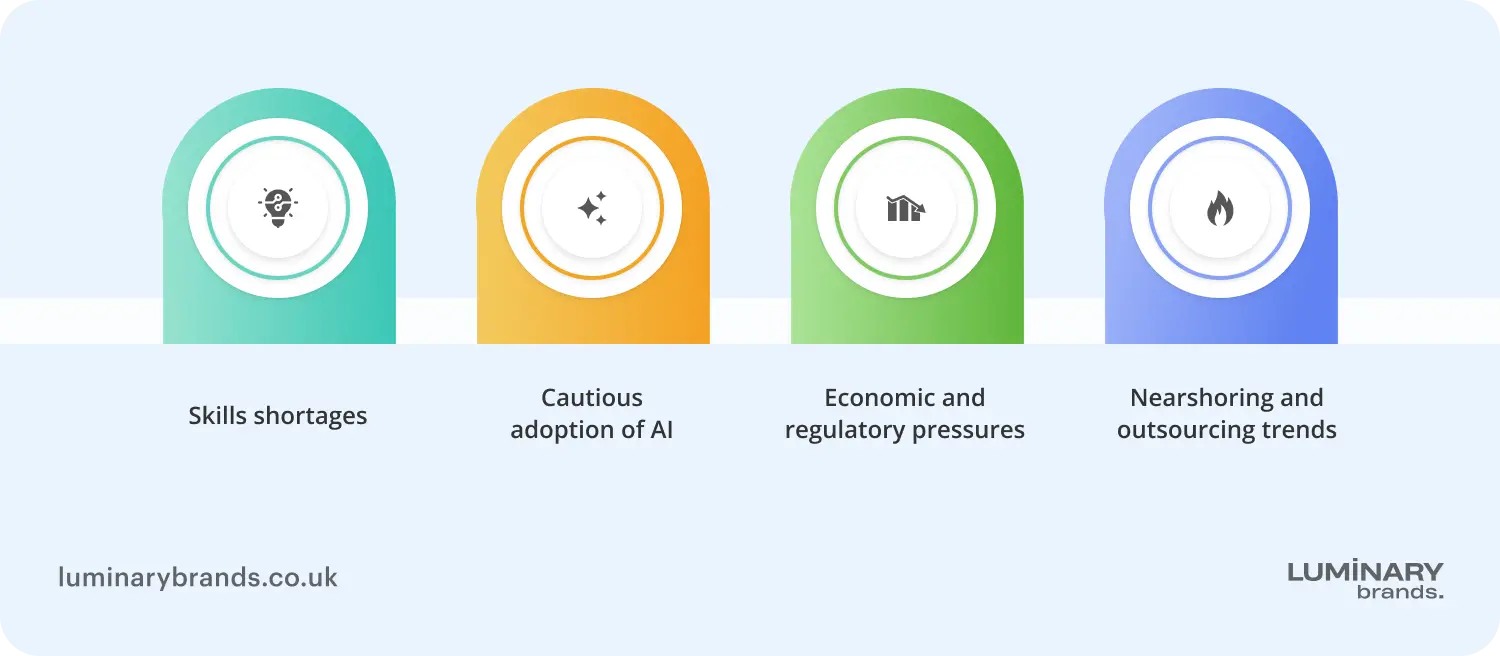
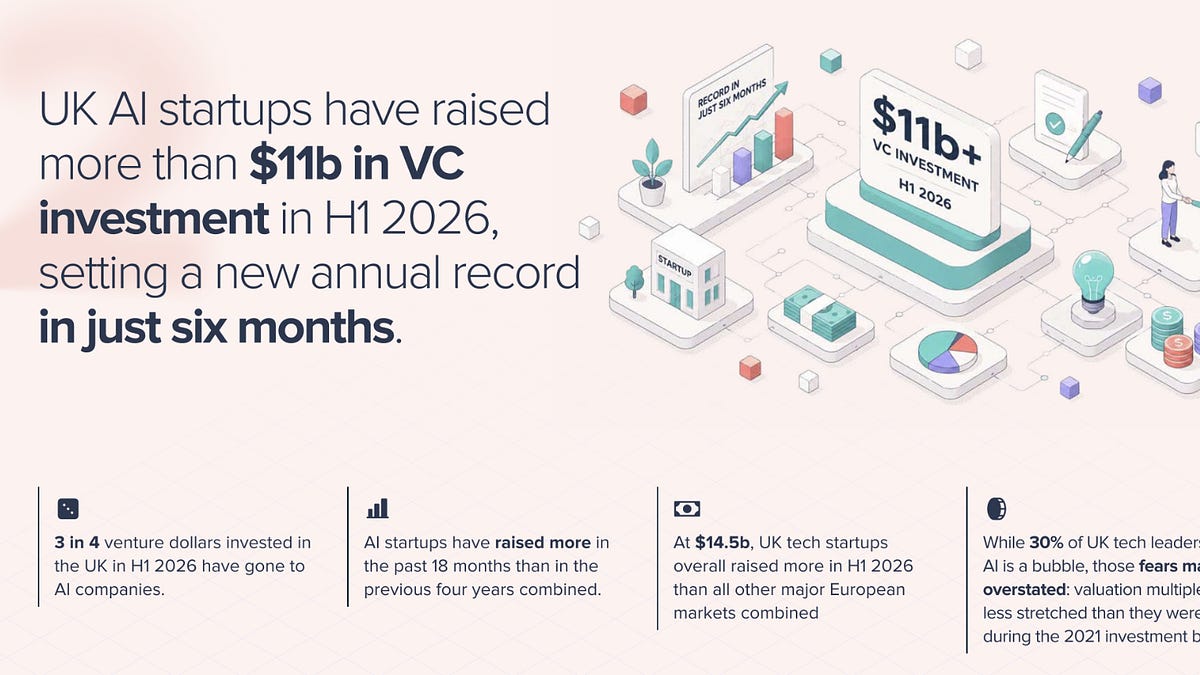
AI has actually fundamentally altered how mid-market firms are staffed in 2026. Instead of replacing employees, AI is utilized to enhance their capabilities. A mid-sized engineering firm may utilize AI to handle the preliminary design stage of a task, enabling its human engineers to concentrate on intricate problem-solving and client relations. This shift has altered the abilities needed for entry-level positions. Graduates are now expected to know how to trigger and handle AI tools as part of their daily workflow.
For leaders, the challenge is handling this transition without destructive morale. It involves a constant process of reskilling and upskilling the existing labor force. Companies that invest in their people during this transition see greater levels of commitment and performance. The 2026 executive understands that while innovation offers the tools, it is individuals who offer the one-upmanship through their imagination and emotional intelligence. Managing the worries and expectations of a labor force in the age of AI is possibly the most uphill struggle a modern-day leader deals with.
Future Outlook for the Mid-Market Sector
As 2026 advances, the outlook for UK mid-market firms stays cautiously positive. The period of cheap debt and stable markets is over, however it has actually been replaced by an era of performance and precision. The leaders who have actually endured and grown are those who welcomed modification early and developed organisations that are both lean and durable. They have moved away from the puffed up structures of the past and produced organizations that can withstanding external shocks while taking brand-new chances.
The rest of 2026 will likely see further debt consolidation in the sector, as smaller firms that fought with the shift are gotten by larger, more effective rivals. This will create a group of "super-mid" business that have the scale to contend globally but the dexterity to respond in your area. For the individuals leading these companies, the pressure will not reduce. The requirement for continuous knowing and adjustment is now a long-term function of business life in the UK. Those who can keep their focus and stay ahead of the technological curve will be the ones who specify the financial successes of the late 2020s.

Table of Contents
- – Adapting Leadership Models for an Unpredictabl...
- – The Integration of Data and Human Intelligence
- – The Rise of the Fractional Executive
- – Global Growth and Sell a New Era
- – Managing Regulatory Divergence
- – Sustainability as a Monetary Crucial
- – The Impact of Expert System on Labor Force St...
- – Future Outlook for the Mid-Market Sector
Latest Posts

Adapting Governance for the Speed of Digital Commerce

Leading Through Change: The Evolution of the UK Executive
Redefining the C-Suite: New UK Management Paradigms for 2026
Latest Posts
Adapting Governance for the Speed of Digital Commerce
Leading Through Change: The Evolution of the UK Executive
Redefining the C-Suite: New UK Management Paradigms for 2026