All Categories
Featured
The Future of Sourcing: Predictive AI in the UK Talent Market
Table of Contents
- – Adapting Leadership Designs for an Unstable 20...
- – The Combination of Data and Human Intelligence
- – The Increase of the Fractional Executive
- – Global Expansion and Sell a New Period
- – Managing Regulatory Divergence
- – Sustainability as a Financial Imperative
- – The Effect of Expert System on Workforce Stru...
- – Future Outlook for the Mid-Market Sector



Adapting Leadership Designs for an Unstable 2026 Economy
Management teams within the UK mid-market are presently browsing a period of substantial structural change. In 2026, the traditional top-down hierarchy has largely fallen out of favour, changed by more nimble, dispersed decision-making procedures. This shift is not merely a pattern however a necessity driven by the speed of market fluctuations and the complexity of international supply chains. Executives now concentrate on fast action times and the ability to pivot operations without the bureaucratic delays that identified earlier decades.
The mid-market, defined by firms with turnovers varying from ₤ 10 million to ₤ 500 million, stays the engine of the British economy. The leadership requirements for these firms have altered. In 2026, a Chief Executive is expected to be as comfortable with algorithmic data as they are with standard balance sheets. The focus has actually moved far from long-term five-year plans, which frequently ended up being outdated before they were printed, toward rolling eighteen-month techniques that are updated every quarter based on real-time performance signs.
Success in this environment depends upon how quickly a board can interpret external information. External pressures, including shifting trade arrangements and brand-new carbon taxes, need a level of flexibility that was when the reserve of little startups. Now, even established mid-sized producers and provider are adopting these approaches to stay competitive versus global competitors. Leaders who stop working to adopt this mentality typically discover their business fighting with stagnant growth or decreasing margins.
The Combination of Data and Human Intelligence
Information is the main currency for UK directors in 2026. Nevertheless, the large volume of info offered has actually produced a new challenge: distinguishing signal from noise. Efficient leaders are those who develop groups capable of synthesising diverse information points into actionable intelligence. This has actually led to the rise of the data-literate C-suite, where every member, from marketing to finance, possesses a fundamental understanding of data science. Investment in Mid-Market Global Strategy has actually become a standard line item for any company major about keeping its market share.
Instead of depending on gut impulse, 2026 executives use predictive modelling to expect shifts in customer behaviour. For instance, a mid-market merchant might utilize these models to change inventory levels weeks before an anticipated change in local demand happens. This proactive approach reduces waste and makes sure that capital is not bound in slow-moving stock. It is a medical, effective method of running that leaves little room for the nostalgic accessory to old product lines or legacy systems.
In spite of the heavy reliance on innovation, the human aspect remains essential. In 2026, the role of a leader is to function as a filter, guaranteeing that the company stays focused on its core objectives while the innovation deals with the repeated analysis. This balance prevents the company from ending up being a cold, automatic entity. High-performing leaders invest more time on internal culture and skill development than their predecessors did, identifying that a knowledgeable labor force is the only thing that can not be quickly reproduced by rivals.
The Increase of the Fractional Executive
A notable advancement in 2026 is the extensive usage of fractional leadership. Numerous mid-market firms no longer use a full-time Chief Innovation Officer or Chief Sustainability Officer. Instead, they hire highly specialised specialists on a part-time or job basis. This enables companies to access high-level expertise without the expense of a full-time executive income and advantages package. It also brings fresh perspectives into the boardroom, preventing the groupthink that can occur when the very same group stays together for too numerous years.
These fractional leaders often work throughout several non-competing firms, bringing a breadth of experience that an irreversible employee may do not have. They are especially effective for particular jobs, such as managing a merger or managing a significant digital overhaul. This design fits the 2026 need for agility, allowing companies to scale their management capacity up or down as the marketplace dictates. For many, identifying Comprehensive Mid-Market Global Strategy as a top priority has actually led directly to this flexible staffing solution.
Global Expansion and Sell a New Period
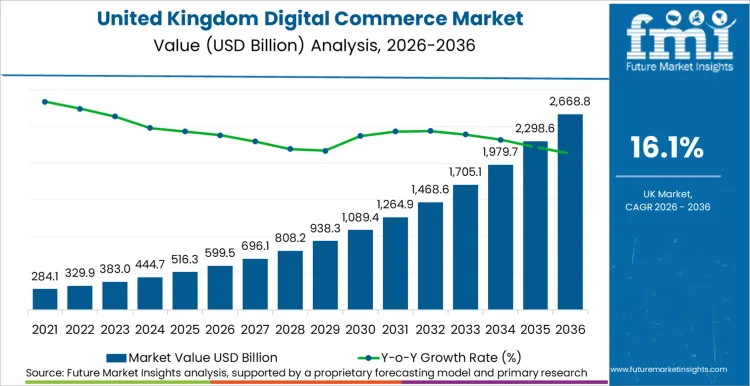
British mid-market firms in 2026 are significantly looking beyond European borders for growth. While trade with neighbouring countries stays crucial, the focus has moved toward high-growth markets in the Indo-Pacific and North America. This change is supported by several trade arrangements transferred the last few years, which have decreased tariffs and streamlined expert credentials. Management teams now include professionals in worldwide trade law and cross-cultural settlement to handle these new relationships.
Growth in 2026 is rarely about physical existence alone. Many UK companies are using digital-first entry strategies, screening markets with online services before committing to regional workplaces or producing plants. This "lite" entry model decreases the financial danger of global growth. It allows a company to build a brand and comprehend local subtleties before making a heavy capital financial investment. Leaders in 2026 are a lot more cautious about "flag-planting" and prefer a phased method that prioritises profitability over gross turnover.
Supply chain security is another significant focus. The disturbances of previous years taught mid-market leaders that geographical diversity is important. In 2026, lots of firms have actually embraced a "China Plus One" or "Europe Plus One" strategy, guaranteeing they have secondary providers in various regions. This redundancy adds expense, however it provides a level of security that investors now require. Leaders who can show a durable supply chain are viewed much more positively by investors and lending institutions alike.
Managing Regulatory Divergence
Running in numerous jurisdictions in 2026 methods handling a complex web of various regulations. The UK has actually taken its own regulative course in sectors like life sciences and financial innovation, which provides chances however likewise produces friction for firms running globally. Leaders need to be proficient at navigating these distinctions without letting the cost of compliance eat into their margins. This has actually resulted in a boom in regulative innovation, which automates much of the tracking and reporting required by various governments.
The ability to stay compliant while remaining competitive is a trademark of the 2026 leader. It needs a deep understanding of both regional and worldwide law. Mid-market firms typically partner with specialized experts to manage this, guaranteeing they do not fall nasty of new guidelines regarding information privacy or environmental requirements. Those who manage this effectively find that they can use their compliance record as a competitive benefit, winning agreements from bigger corporations that require stringent adherence to international requirements from their suppliers.
Sustainability as a Financial Imperative
In 2026, sustainability is no longer a separate department or a marketing workout. It is integrated into the core financial strategy of every successful mid-market company. This modification was driven by two factors: financier demand and the increasing expense of carbon. Banks and private equity companies now look at a company's ecological footprint as a key indication of its long-term practicality. A company with a high carbon strength is seen as a high-risk investment, leading to greater loaning costs.
Management in 2026 includes finding ways to decouple growth from environmental impact. This often means investing in brand-new production processes or switching to sustainable energy sources. These are not simply ethical choices but hard-nosed company choices intended to protect the bottom line. Executives who can show a clear path to net-zero are seeing their business appraisals rise, while those who drag are discovering it progressively tough to draw in capital or top-tier talent.
The 2026 workforce, especially more youthful staff members, expects the business they work for to have a clear sense of purpose. This has actually made recruitment a challenge for companies that can not show a dedication to social and environmental obligation. Leaders now invest a substantial quantity of their time communicating their worths to both internal and external stakeholders. This openness is necessary for developing trust in a period where corporate actions are under constant examination from social media and activist financiers.
The Effect of Expert System on Workforce Structure
AI has actually basically changed how mid-market companies are staffed in 2026. Rather than changing workers, AI is utilized to augment their abilities. A mid-sized engineering company might utilize AI to deal with the initial style phase of a task, permitting its human engineers to focus on complicated analytical and client relations. This shift has actually changed the skills needed for entry-level positions. Graduates are now expected to understand how to prompt and handle AI tools as part of their day-to-day workflow.
For leaders, the obstacle is managing this transition without damaging morale. It includes a constant process of reskilling and upskilling the existing workforce. Business that buy their people during this shift see greater levels of commitment and efficiency. The 2026 executive comprehends that while technology offers the tools, it is individuals who supply the one-upmanship through their creativity and emotional intelligence. Handling the worries and expectations of a workforce in the age of AI is perhaps the most uphill struggle a contemporary leader faces.
Future Outlook for the Mid-Market Sector
As 2026 advances, the outlook for UK mid-market companies stays cautiously positive. The period of low-cost financial obligation and stable markets is over, but it has been changed by a period of effectiveness and accuracy. The leaders who have made it through and grown are those who welcomed change early and constructed organisations that are both lean and resistant. They have actually moved far from the bloated structures of the past and created companies that are capable of holding up against external shocks while seizing brand-new chances.
The remainder of 2026 will likely see more combination in the sector, as smaller firms that dealt with the transition are gotten by larger, more effective competitors. This will produce a group of "super-mid" companies that have the scale to contend internationally but the dexterity to respond in your area. For the people leading these firms, the pressure will not lessen. The requirement for consistent knowing and adjustment is now an irreversible function of business life in the UK. Those who can keep their focus and stay ahead of the technological curve will be the ones who define the economic successes of the late 2020s.

Table of Contents
- – Adapting Leadership Designs for an Unstable 20...
- – The Combination of Data and Human Intelligence
- – The Increase of the Fractional Executive
- – Global Expansion and Sell a New Period
- – Managing Regulatory Divergence
- – Sustainability as a Financial Imperative
- – The Effect of Expert System on Workforce Stru...
- – Future Outlook for the Mid-Market Sector
Latest Posts

Adapting Governance for the Speed of Digital Commerce

Leading Through Change: The Evolution of the UK Executive
Redefining the C-Suite: New UK Management Paradigms for 2026
Latest Posts
Adapting Governance for the Speed of Digital Commerce
Leading Through Change: The Evolution of the UK Executive
Redefining the C-Suite: New UK Management Paradigms for 2026