All Categories
Featured
Why Ethical Sourcing Is Now a Board-Level Top Priority
Table of Contents
- – Predictive Modeling in the UK Skill Markets
- – Skills-First Hiring and the Decline of Degree ...
- – Ethical AI and Algorithmic Openness in 2026
- – Virtual Interviewing and Sentiment Analysis
- – Enhancing the Internal Labor Force
- – The Human-in-the-Loop Requirement
- – Data Personal Privacy and Candidate Ownership

Predictive Modeling in the UK Skill Markets
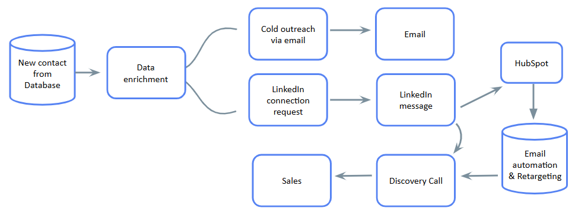
The employing procedures throughout the UK in 2026 have actually moved away from reactive actions to vacancies. Rather of waiting for a function to open, companies now use predictive modeling to prepare for staffing needs months before they happen. These systems analyze historic turnover data, market development patterns, and even local economic shifts in regional areas to figure out when a particular department will likely require new workers. This transition from "working with when required" to "working with because we will require" has considerably reduced the time positions remain vacant.Data-driven sourcing has actually ended up being the primary approach for discovering specialized talent. In 2026, the reliance on traditional task boards has faded. AI representatives now crawl professional networks, open-source repositories, and digital portfolios to identify passive prospects who have the exact technical profile required for a role. These tools do not just take a look at job titles. They examine the complexity of tasks a person has actually dealt with and the frequency of their ability updates. This level of information allows employers in the UK to approach prospects with high-intent offers that align with their real career progression.Efficiency in these processes has actually been strengthened by the adoption of automated preliminary outreach. Nevertheless, this is not the spam-heavy technique of the past. The AI used in 2026 creates highly tailored messages that reference specific achievements or public contributions made by the prospect. This customization has actually led to greater reaction rates and a more considerate candidate experience. Numerous companies have found that focusing on Market Expansion enables their human HR personnel to invest more time on late-stage interviews and cultural alignment instead of administrative sorting.
Skills-First Hiring and the Decline of Degree Requirements
Among the most noticeable modifications in 2026 is the relocation towards skills-first hiring. Many UK firms have actually removed university degree requirements for a big portion of their roles, focusing rather on validated proficiencies. AI platforms now supply automated skill assessments that exceed easy multiple-choice concerns. For technical roles, these might involve live coding environments or data analysis tasks. For creative roles, they may involve real-time problem-solving simulations.This shift has actually opened doors for a more diverse labor force in the surrounding region. By getting rid of the predisposition associated with prominent universities or specific instructional backgrounds, companies are finding talent that was previously hidden. The AI evaluates what a person can do today, not what they studied five or 10 years back. This approach is particularly effective in sectors like software application development, digital marketing, and renewable resource, where the rate of change is so quick that formal education often drags market needs.The information collected during these skill evaluations likewise assists with labor force optimization. Once a prospect is hired, the info from their evaluation is fed into their professional advancement plan. The AI identifies locations where the brand-new hire may require support or more training, guaranteeing they are efficient from their very first week. Organizations that invest in Effective Market Expansion Strategy are seeing much better retention rates because they can map out clear career paths based on the actual capabilities of their personnel.
Ethical AI and Algorithmic Openness in 2026
As AI has actually become a standard part of recruitment in the UK, the focus on ethics and fairness has actually intensified. In 2026, UK labor policies require companies to perform routine audits on their hiring algorithms to ensure there is no hidden predisposition against secured groups. These audits take a look at how the AI focuses on prospects and whether it unintentionally utilizes proxies for age, gender, or ethnicity.Transparency has ended up being a selling point for companies. Prospects in 2026 are more knowledgeable about their information rights and frequently ask how an AI influenced the choice to move them forward or decline them. Leading firms in the local market now supply "AI Summaries" to candidates, explaining the crucial elements the system identified in their profile. This openness develops trust and helps prospects understand how to better present their skills in the future.To mitigate predisposition, numerous AI tools now use "blind screening" by default. The system strips away names, addresses, and graduation dates before the very first round of review. This makes sure that the initial shortlist is based purely on merit. Human employers then step in for the final interviews, but they do so with a slate of prospects who have currently been vetted for their unbiased capability to do the task. This well balanced method keeps the human element at the center of final decision-making while utilizing technology to eliminate the noise of unconscious predisposition.
Virtual Interviewing and Sentiment Analysis
The interview procedure itself has undergone a digital change. In 2026, the very first round of interviews is frequently conducted in a virtual setting that uses sentiment analysis to help recruiters. These tools do not make choices on their own. Rather, they supply a report on the prospect's engagement levels, the clearness of their communication, and their confidence when discussing particular subjects. This information supplies a constant baseline for comparing various applicants.In nearby areas, where remote and hybrid work is the standard, these virtual tools are necessary for evaluating how well a candidate can interact through digital channels. The software application can identify subtle hints that a human interviewer may miss out on, such as a slight doubt when going over a specific technology or a high level of interest for a specific type of project. Recruiters utilize these insights to ask better follow-up questions in subsequent rounds.VR-based simulations have likewise become common for roles that need physical or spatial abilities. A candidate for a site management role in the construction sector might invest half an hour in a virtual environment, browsing a complicated job site and determining security dangers. The AI tracks their movements and decisions, supplying a rating that reflects their situational awareness and technical understanding. This technique offers a a lot more precise image of a candidate's capabilities than a traditional sit-down discussion.
Enhancing the Internal Labor Force
AI in 2026 is not simply for discovering external skill. It is being used greatly for internal labor force optimization. Large UK companies now have "internal skill markets" where AI suggests present employees for brand-new tasks or open positions. This decreases the cost of recruitment and enhances staff member complete satisfaction by offering clear development opportunities. The system takes a look at a staff member's performance data, their finished training modules, and even their revealed interests to find the very best match.This internal focus assists business in the UK address the skills space. Rather of browsing the external market for an unusual expert, the AI might identify 3 existing employees who have 80% of the required skills. The company can then provide targeted upskilling to bridge the staying 20%. This technique is more affordable and assists construct a devoted workforce that feels the business is invested in their long-lasting career.Managers in the local area are also using AI to develop better teams. By evaluating the work designs and strengths of present employee, the AI can suggest the "missing piece" when a new hire is needed. It might suggest somebody with high analytical abilities to balance a group that is currently strong in creativity. This level of optimization ensures that groups are not just gifted individuals but a cohesive unit that works well together.
The Human-in-the-Loop Requirement
Regardless of the heavy integration of AI, the human recruiter's role has ended up being more specific rather than obsolete. In 2026, the term "human-in-the-loop" is a standard practice. The AI deals with the information processing, the preliminary screening, and the administrative scheduling, but a human always makes the final hiring offer. This ensures that compassion, cultural fit, and complex negotiation remain part of the process.Recruiters have actually transitioned into skill specialists. They invest their time encouraging employing supervisors on market patterns, analyzing AI-generated data, and building relationships with top-tier prospects. The job has moved far from the drudgery of reading hundreds of resumes and toward the top-level work of talent method. In the surrounding region, this has led to a more professionalized HR sector where data literacy is simply as crucial as individuals skills.Candidates likewise gain from this human-centric method. When they reach the last phases of the procedure, they interact with a person who has a complete understanding of their background and capacity, thanks to the AI's deep analysis. The conversations are more meaningful due to the fact that the standard questions have actually already been addressed. This creates a more expert and fulfilling experience for everyone involved in the hiring cycle during 2026.
Data Personal Privacy and Candidate Ownership
The landscape of 2026 consists of a strong emphasis on candidate data ownership. New "portable profile" technologies permit candidates to keep their verified ability assessments and interview data in a safe digital wallet. They can select to share this data with potential companies in the UK to accelerate the application process. This minimizes the requirement for candidates to take the very same tests consistently and gives them more control over how their details is used.Employers are finding that candidates are more happy to engage with AI tools when they understand they own the resulting data. This has actually led to a more collective recruitment procedure. In the regional market, firms that appreciate these data borders are seeing a better credibility amongst the top 10% of talent. Privacy is no longer just a compliance issue; it is an essential part of the company brand.As the year 2026 advances, the combination of AI in recruitment continues to mature. The preliminary hype has actually been replaced by useful applications that prioritize efficiency, fairness, and the prospect experience. By using technology to deal with the heavy lifting of information analysis, UK companies have found a method to make the employing process more human, not less. The focus remains on finding the right person for the right role at the best time, with AI providing the insights needed to make those decisions with confidence.

Table of Contents
- – Predictive Modeling in the UK Skill Markets
- – Skills-First Hiring and the Decline of Degree ...
- – Ethical AI and Algorithmic Openness in 2026
- – Virtual Interviewing and Sentiment Analysis
- – Enhancing the Internal Labor Force
- – The Human-in-the-Loop Requirement
- – Data Personal Privacy and Candidate Ownership
Latest Posts

Adapting Governance for the Speed of Digital Commerce

Leading Through Change: The Evolution of the UK Executive
Redefining the C-Suite: New UK Management Paradigms for 2026
Latest Posts
Adapting Governance for the Speed of Digital Commerce
Leading Through Change: The Evolution of the UK Executive
Redefining the C-Suite: New UK Management Paradigms for 2026